
Title, lien, and ownership record research is not the same as browsing foreclosure listings or building lead lists. You may need to review deeds, mortgages, liens, tax records, ownership changes, document images, property reports, and county-level sources before trusting a property opportunity. A record search can show warning signs, but it does not replace a title company, attorney, or official county confirmation.
ForeclosureHub gives the property context first, while NETR Online, CourthouseDirect, EasyTitleSearch, TitlePro247, and PropertyIQ cover public records, title clues, documents, and ownership checks from different sides. This list is built for research preparation before deeper due diligence, not for legal or title advice.
1. ForeclosureHub
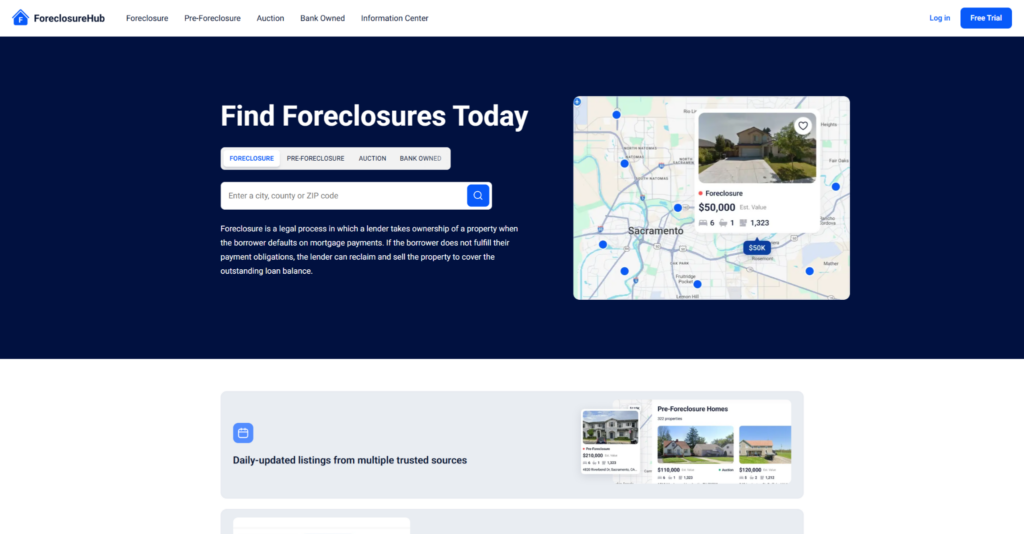
ForeclosureHub takes the first spot because title and lien research usually needs property context before users move into document checks. Users can search pre-foreclosure, foreclosure, bank-owned, and auction listings across the United States. The ForeclosureHub property record research tool gives users a focused way to review distressed-property data before they compare outside title or public record tools. The platform provides owner details, mortgage records, tax data, transaction history, market information, and free skip tracing. Some county data may update faster than others, and there is no dedicated mobile app yet.
ForeclosureHub should not be presented as a full title search service. Its role is to help users understand the property, owner record, debt context, and market background before checking deeds, liens, or county documents:
- Pre-foreclosure, foreclosure, bank-owned, and auction listings;
- Free skip tracing included with every property search;
- Owner, mortgage, tax, assessment, and transaction details;
- Transaction history and property-level context;
- Saved searches and email alerts for matching properties.
ForeclosureHub gives users the first research layer before they move into title, lien, deed, or official county record checks.
Preferred use
ForeclosureHub works best at the start of the research process. It helps users decide whether a property deserves deeper record review. It should support due diligence, not replace official title work.
2. NETR Online
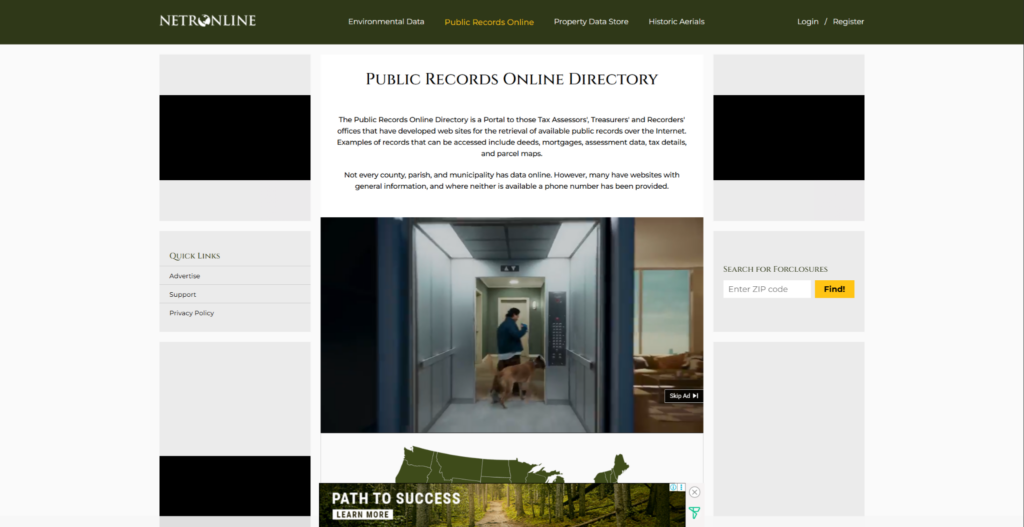
NETR Online gives users a practical path into public record research. It helps users find county-level sources for assessor, treasurer, recorder, tax, deed, mortgage, assessment, and parcel map records. That matters when someone wants to move from a property lead into official local record sources. Coverage depends on the county and the records available online. NETR Online is better for finding the right record path than for producing one finished title answer.
NETR Online can reduce the time needed to locate county record offices and public record links. Users still need to read each county source carefully because formats, search fields, and available documents vary:
- County assessor and recorder links;
- Property tax and assessment record paths;
- Deed, mortgage, and public record source discovery;
- Parcel map and local record access where available;
- Starting point for county-level research.
NETR Online helps users find where the official records may live, but the actual document review still happens through local sources.
Record path match
NETR Online is the better choice when the user needs to locate the right public record office or online portal. It can be especially helpful when researching counties the user does not know well. It works as a directory, not a replacement for reading the record itself.
3. CourthouseDirect
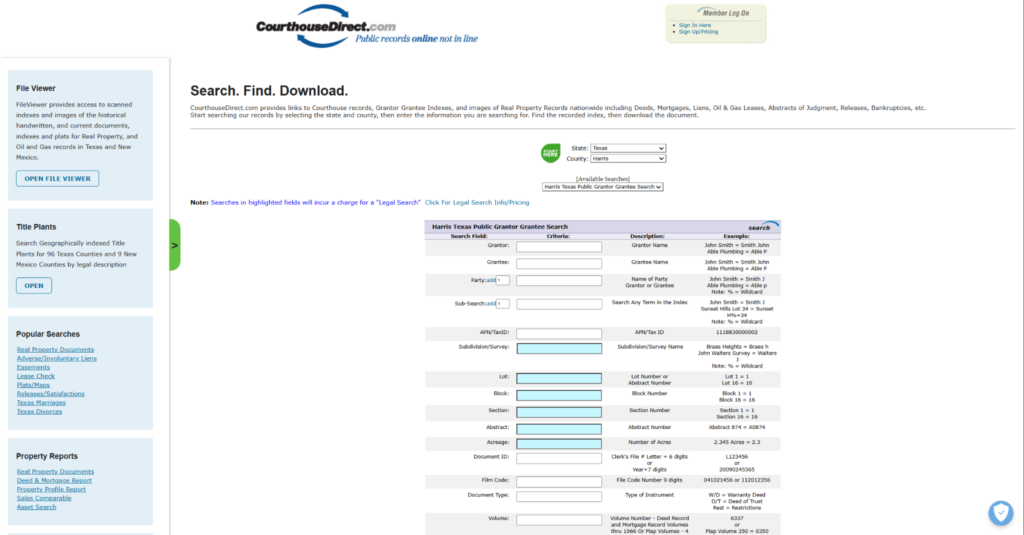
CourthouseDirect brings users closer to recorded property documents. Users can search real property documents, deeds, mortgages, liens, plats, releases, satisfactions, and related county records, depending on location. This makes it relevant when the user needs document-level review rather than a simple property summary. Scanned records and indexes still require careful reading because small details can change the meaning of a file. CourthouseDirect works well for users who want to inspect source documents more directly.
CourthouseDirect is strongest when users need access to recorded documents and indexes. It can support ownership and lien research, but legal interpretation still needs a qualified professional when the outcome matters:
- Real property document search;
- Deeds, mortgages, liens, releases, and plats;
- Recorded document images where available;
- Grantor and grantee index research;
- Document-level property review.
CourthouseDirect can help users review recorded documents, but the records still need careful interpretation before any decision.
Document review match
CourthouseDirect is the better option when a user wants more than a property profile. It can help users inspect the paper trail behind ownership and lien history. It works well for users who are comfortable reading recorded documents.
4. EasyTitleSearch
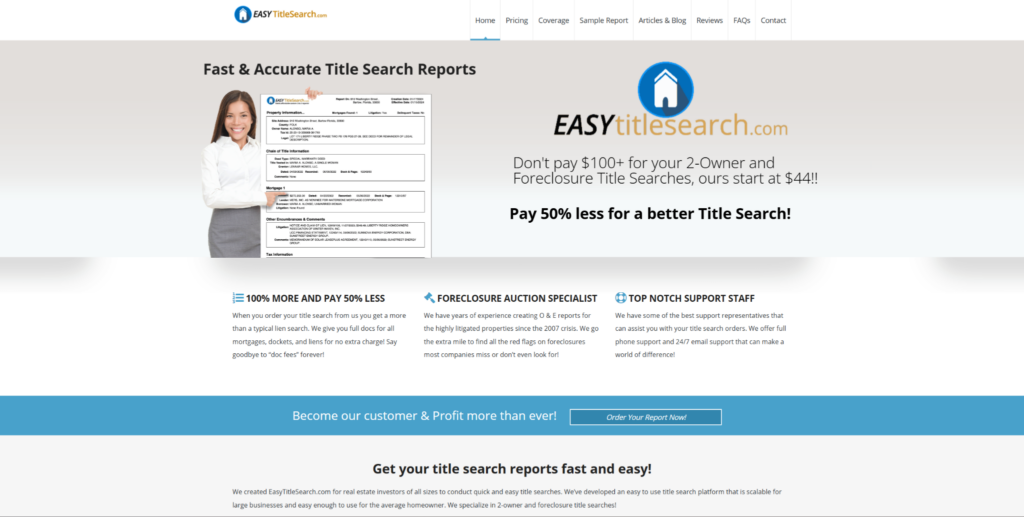
EasyTitleSearch gives the Top 6 a title report option. It focuses on Florida title search reports and can include property liens, mortgages, deeds, litigation, tax status, current owner information, and legal description, depending on the report. This can help investors who want a faster title snapshot before deeper review. A title report is still not the same as legal advice or closing-level title insurance. EasyTitleSearch makes sense when the user wants a title-focused summary rather than raw records only.
EasyTitleSearch is more report-based than directory-based. Users should confirm important findings through official records or title professionals when money is at stake:
- Florida title search reports;
- Lien, mortgage, deed, and litigation checks;
- Tax status and legal description details;
- Current owner information;
- Title snapshot for investor review.
EasyTitleSearch can make title research easier to scan, but major findings still need confirmation.
Title snapshot match
EasyTitleSearch is a better match when users want a readable title-focused report. It can help flag items that deserve deeper attention. It is better for Florida-focused title review than for broad national public-record browsing.
5. TitlePro247
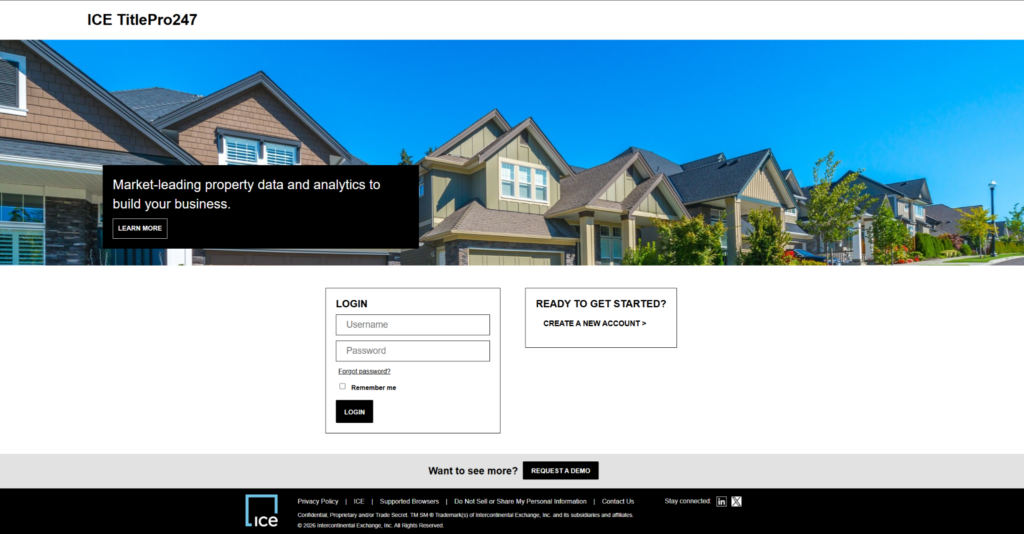
TitlePro247 brings a property data and analytics layer into the list. It is connected with property data, property profiles, ownership details, and analytics used by real estate professionals. This can help when users want to record context inside a more business-oriented property research workflow. Property data platforms still depend on source quality, update timing, and how the user reads the results. TitlePro247 is more suitable for users who want property information organized for real estate decisions.
TitlePro247 is more about property data organization than manual county searching. It can help users review ownership and property profile details before they decide what needs official verification:
- Property data and analytics;
- Property profile research;
- Ownership detail review;
- Real estate workflow support;
- Organized property checks.
TitlePro247 can support real estate record review, but important ownership or title issues still need source-level confirmation.
Property profile match
TitlePro247 is a better choice when the user wants property information arranged in a practical business workflow. It can help with ownership and profile checks before deeper document review. It works as a research tool, not a final title opinion.
6. PropertyIQ
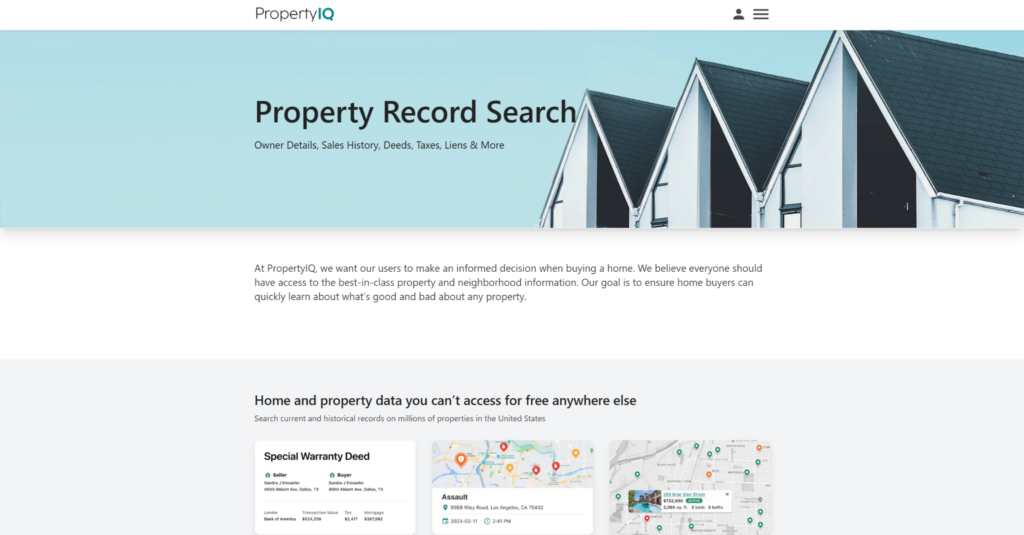
PropertyIQ gives the Top 6 a quick property report and ownership research option. It can be used for property reports, ownership information, home facts, valuation clues, tax details, and record-based property context. This can help when a user wants a basic property background check before moving into official documents. Property report sources can vary in depth and accuracy, so the information should be treated as a starting point. PropertyIQ is better for early research than for final title or lien confirmation.
PropertyIQ can help users build a quick background view of a property. It should be followed by official record checks if title, lien, or ownership issues appear:
- Property report research;
- Ownership and home fact details;
- Tax and valuation-related information;
- Early record-based property context;
- Quick background checks.
PropertyIQ can help users screen a property, but the final record review should still come from official sources.
Quick check match
PropertyIQ is a good match when the user needs a simple property background view. It can help decide whether deeper record research is worth the time. It should not be treated as a final answer on liens, title, or ownership.
Final Thoughts
Title, lien, and ownership research should move from property context to documents, not the other way around. ForeclosureHub gives users property and owner context before they compare public records, title reports, and document sources. NETR Online helps users locate county-level record paths, while CourthouseDirect and EasyTitleSearch support deeper document- or title-focused review. TitlePro247 and PropertyIQ help organize property profiles and early record checks before users spend more time on official documents. Any serious lien, deed, title, or ownership issue should be confirmed through official records and qualified professionals before action.