
Ask five distributors what they want from DSD software and you’ll probably hear five different answers.
One company wants to eliminate paper invoices. Another needs better route planning. Someone else is tired of exporting spreadsheets into QuickBooks every evening. Then there are businesses that have outgrown a simple order-taking app and need something that ties together sales, deliveries, inventory, and customer visits.
That’s what makes shopping for DSD software surprisingly difficult. Most platforms solve part of the problem, but not necessarily the part that’s slowing your team down.
Some products are built around route accounting. Others lean heavily into B2B ordering or field sales. Enterprise systems often cover almost everything, though they can require months of implementation and a much larger budget. Smaller SaaS platforms usually get teams up and running faster, but they don’t all offer the same operational depth.
Instead of looking for the software with the longest feature list, it’s worth asking a different question: Which platform matches the way your business actually works?
The seven solutions below approach direct store delivery from different angles, making each one a better fit for a particular type of distributor.
1. SimplyDepo
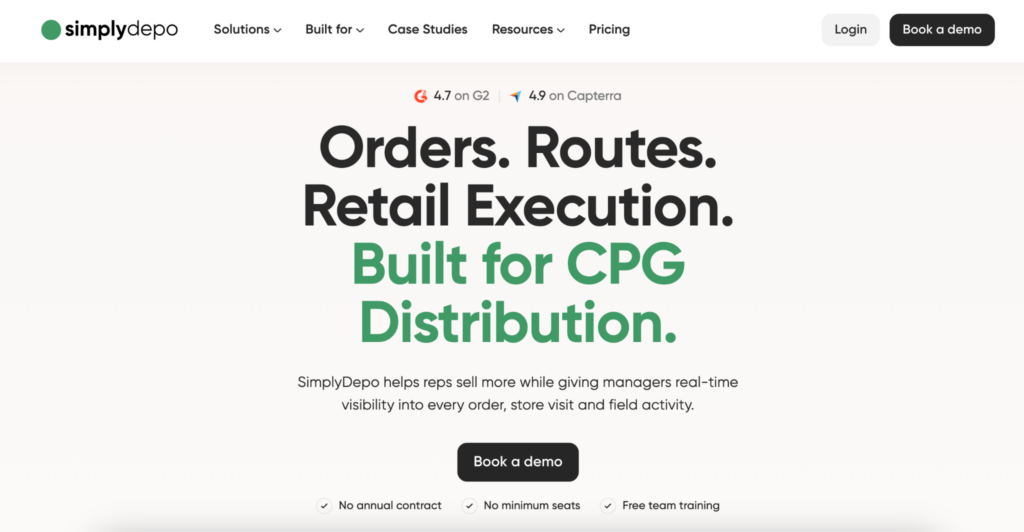
Many DSD platforms start with deliveries and gradually add sales tools. Others begin with field sales and later introduce route management.
SimplyDepo takes a broader view from the beginning. Rather than treating ordering, deliveries, invoicing, and merchandising as separate processes, it connects them into a single workflow that happens during one customer visit.
A sales representative can capture an order, update truck inventory, generate an invoice, collect payment, record proof of delivery, and complete shelf audits without opening another application. Customer information flows directly into QuickBooks Online through a native two-way integration, eliminating much of the manual work that often follows a delivery day.
For distributors managing both sales and retail execution, this approach removes a surprising amount of friction.
Some of its most valuable capabilities include:
- Mobile order capture
- Route planning and optimization
- Van sales
- Mobile invoicing
- Proof of delivery
- Stripe payment collection
- Branded B2B ordering portal
- Shelf audits
- Planogram compliance
- Photo reporting
- Offline functionality
- Native QuickBooks Online synchronization
The platform is especially attractive for self-distributing consumer goods companies that want to replace several disconnected systems with one application. Instead of purchasing separate software for field sales, deliveries, merchandising, and retailer ordering, those activities can be managed together.
That doesn’t mean SimplyDepo fits every operation. Businesses relying on QuickBooks Desktop, SAP Business One, NetSuite, or variable-weight distribution may need solutions designed around those environments.
Who Should Choose SimplyDepo
Growing distributors and CPG brands operating across the United States and Canada that want a unified DSD workflow without lengthy implementation projects.
2. Pepperi
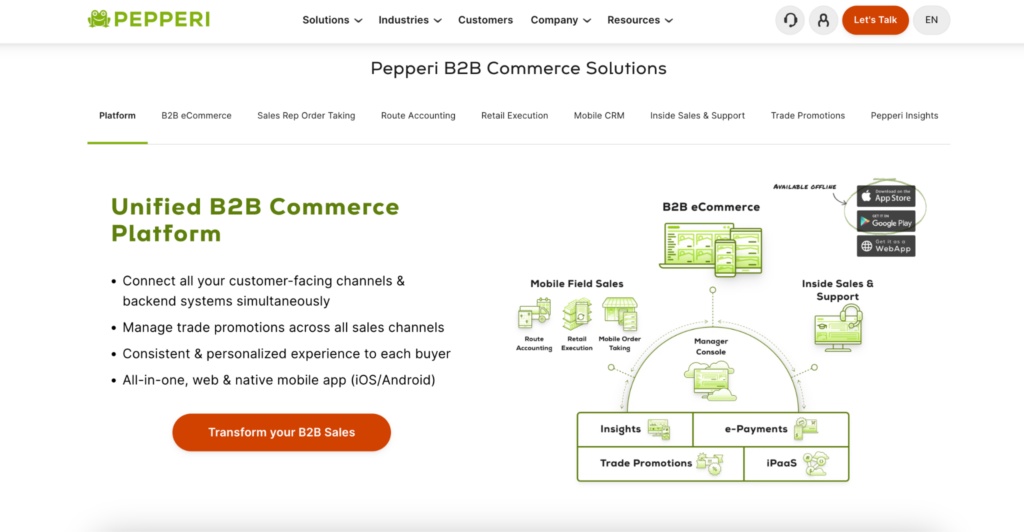
Pepperi has become one of the most recognized names in enterprise distribution software, and for good reason.
Large organizations often need far more than mobile ordering. They require sophisticated pricing structures, customer-specific catalogs, approval workflows, ERP connectivity, retail execution, and support for teams spread across multiple countries. Pepperi was built with those challenges in mind.
Because of that, the platform feels less like a standalone DSD application and more like an enterprise commerce ecosystem.
Key strengths include:
- Enterprise DSD functionality
- Mobile sales
- Retail execution
- B2B commerce
- Customer-specific pricing
- Advanced workflow automation
- Multi-language support
- ERP integrations
Businesses that already operate within SAP, Oracle, Microsoft Dynamics, or NetSuite environments often appreciate Pepperi’s flexibility. Complex sales processes can usually be configured without changing the company’s existing operational structure.
The downside is complexity. Implementation typically requires planning, configuration, and training that smaller distributors may not need. Some users on G2 also mention a learning curve before administrators become comfortable managing the system.
Who Should Choose Pepperi
Enterprise distributors with international operations, advanced ERP environments, and highly customized sales processes.
3. Orders in Seconds (OIS)
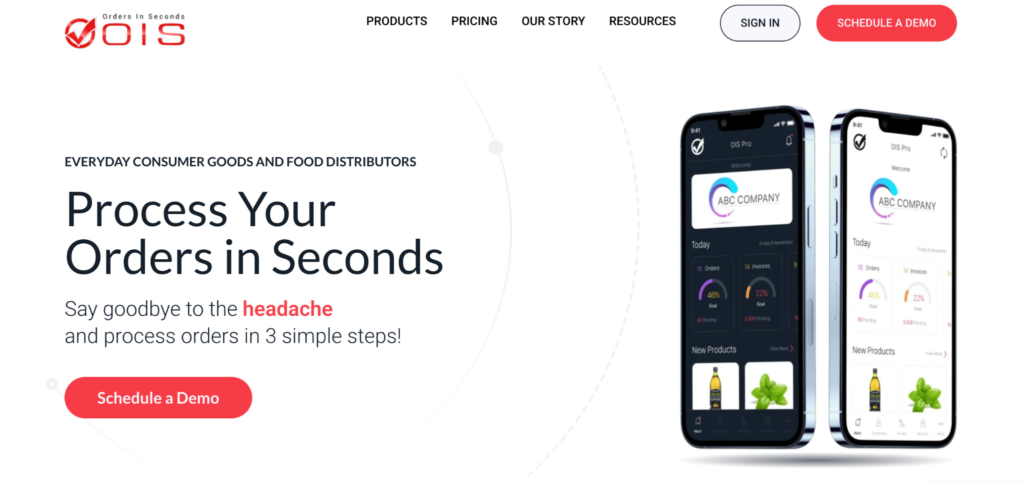
Sometimes simplicity is exactly what a distribution business needs. Orders in Seconds focuses heavily on helping field representatives spend less time entering information and more time selling. The interface is built around mobile ordering, customer visits, catalog management, and direct store delivery rather than broad enterprise functionality.
Its long-standing relationship with the QuickBooks ecosystem also makes it an interesting option for companies that have no intention of replacing their accounting software.
The platform offers:
- Mobile order entry
- Customer management
- Route sales support
- Offline operation
- Digital catalogs
- QuickBooks Online integration
- QuickBooks Desktop integration
- DSD workflows
For distributors whose daily operations revolve around taking orders and servicing existing customers, OIS provides a focused experience without unnecessary complexity. The software intentionally avoids trying to become an all-in-one operational platform.
Companies looking for built-in merchandising, shelf audits, retailer self-service portals, or retail execution reporting may eventually find its feature set too narrow.
Who Should Choose Orders in Seconds
Wholesale distributors and field sales organizations that prioritize mobile ordering and already depend on QuickBooks, especially QuickBooks Desktop.
4. bMobile Route
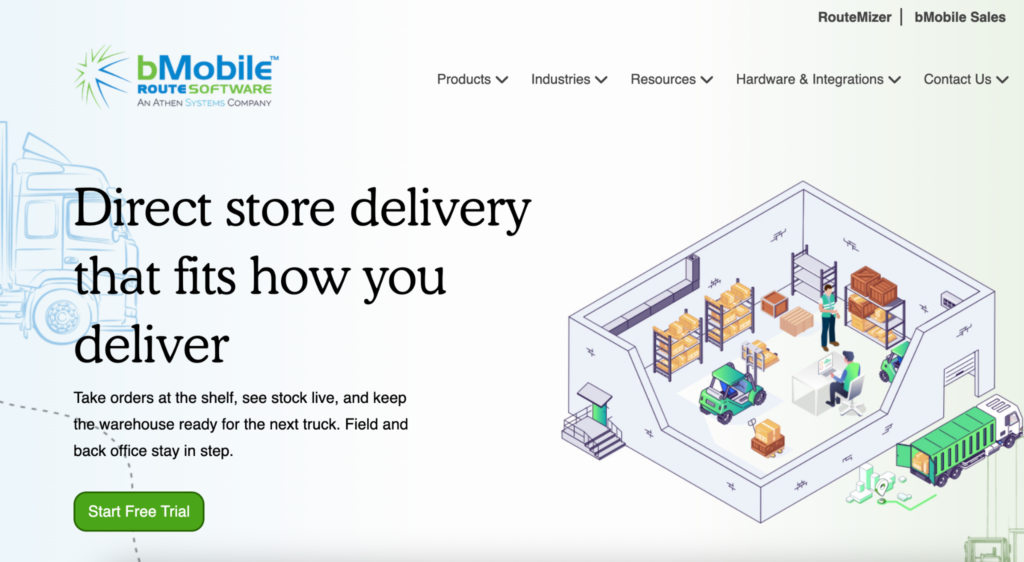
Ask experienced beverage distributors about route accounting software, and bMobile is a name that comes up regularly.
The company has spent years working with food, beverage, dairy, and bakery distributors, which explains why many of its workflows feel familiar to businesses operating delivery routes every day.
Rather than emphasizing retailer self-service or merchandising, bMobile focuses on inventory accuracy, route accounting, customer deliveries, warehouse coordination, and financial reconciliation.
Core functionality includes:
- Route accounting
- Truck inventory
- Delivery management
- Mobile invoicing
- Warehouse integration
- Inventory control
- Reporting tools
- ERP connectivity
Distributors that have reached the point where spreadsheets and manual inventory tracking are slowing down operations often find value in bMobile’s operational depth. Its industry focus is one of its biggest strengths.
Companies searching for integrated retail execution or customer-facing B2B ordering, however, may need additional software alongside it.
Who Should Choose bMobile
Food, beverage, and bakery distributors looking for mature route accounting software with deep operational capabilities.
5. LaceUp Solutions
Every distributor has at least one operational requirement that changes the software conversation.
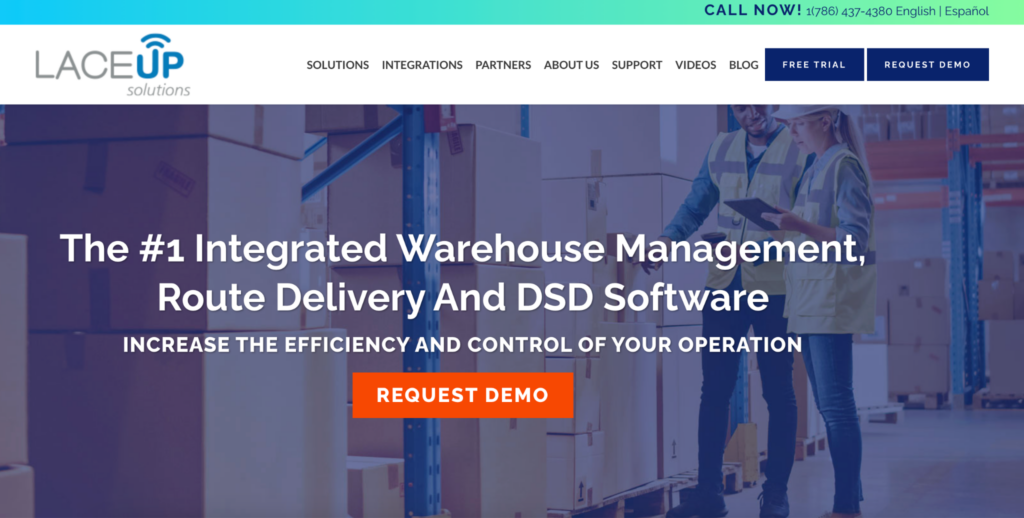
For some, it’s warehouse automation. For others, it’s compliance with large retail chains. LaceUp Solutions has spent years developing tools for distributors that deal with more demanding delivery environments, especially those serving grocery chains and retailers requiring DEX invoicing.
Instead of positioning itself as a lightweight mobile sales app, LaceUp focuses on the operational side of distribution. Truck inventory, delivery accounting, customer pricing, and route management all receive significant attention.
Key capabilities include:
- Route accounting
- Mobile invoicing
- Truck inventory management
- DEX invoicing
- Delivery tracking
- Multi-ERP integrations
- Customer pricing
- Spanish-language support
Companies that depend on DEX transactions or operate across different accounting systems often appreciate LaceUp’s specialized functionality. Those features aren’t essential for every distributor, but they’re difficult to replace when they’re part of daily operations.
On the other hand, businesses searching for built-in merchandising, shelf audits, or retail execution reporting may find themselves adding another application to complete their workflow.
Who Should Choose LaceUp Solutions
Distributors supplying large retail chains or operating in environments where DEX compliance and advanced route accounting are everyday requirements.
6. RouteStar Solutions
Some distributors aren’t interested in replacing their accounting system. They simply want software that works with it instead of creating extra administrative work.
RouteStar Solutions has built its reputation around that idea.
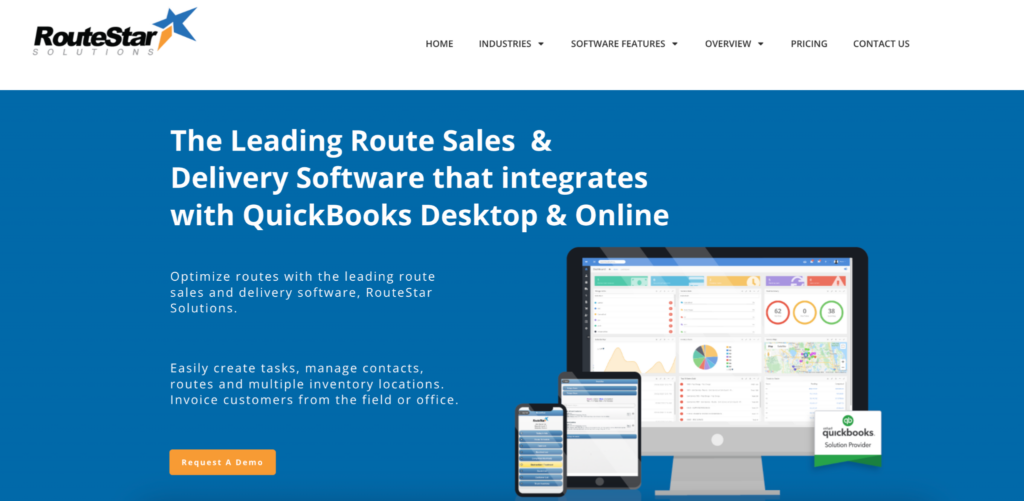
Designed primarily for QuickBooks users, the platform combines route accounting, truck inventory, invoicing, delivery scheduling, and customer management while maintaining two-way synchronization with QuickBooks. That focus makes it a practical option for businesses that already have established accounting processes and want to improve field operations without rebuilding everything else.
The platform includes:
- Route accounting
- Mobile invoicing
- Truck inventory
- Route mapping
- Customer portal
- Delivery tracking
- Two-way QuickBooks synchronization
RouteStar stays close to its core purpose. It doesn’t attempt to become a retail execution platform or an enterprise commerce suite, which keeps the product focused but also limits its appeal for companies needing broader operational functionality.
Who Should Choose RouteStar Solutions
Small and mid-sized distributors running QuickBooks who primarily need stronger delivery management and route accounting.
7. Orderwerks
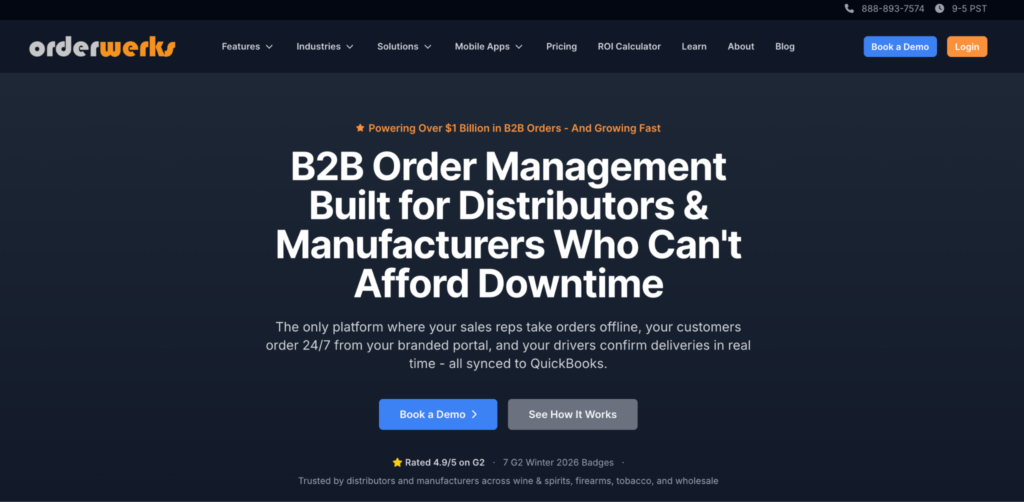
Orderwerks occupies an interesting position in the DSD market because it combines field sales, B2B ordering, and delivery management while also serving industries with specialized compliance requirements.
Wine and spirits distributors, firearms businesses, and tobacco wholesalers often evaluate the platform because of features designed around those sectors. At the same time, its customer ordering portal and mobile sales tools make it useful beyond regulated industries.
It’s less about replacing every operational system and more about connecting ordering with field activity.
Its feature set includes:
- B2B customer portal
- Mobile sales application
- DSD route management
- Offline operation
- Customer-specific pricing
- Multi-accounting integrations
- QuickBooks support
Businesses that rely heavily on retailer self-service often appreciate the balance between customer ordering and field operations. Companies focused on retail merchandising, however, may find dedicated retail execution tools elsewhere.
Who Should Choose Orderwerks
Distributors operating in regulated industries or businesses that place a strong emphasis on customer self-service ordering alongside DSD operations.
Signs Your Current DSD Process Is Holding You Back
Software isn’t always the first problem. Sometimes the process is.
If your office spends hours correcting invoices after drivers return, that’s a warning sign. The same goes for customer information being stored in multiple places, inventory counts that rarely match reality, or field reps calling the office just to confirm pricing.
Another clue is when different teams stop trusting the same data. Sales says one thing, accounting says another, warehouse staff have a third version, and nobody feels completely confident.
Modern DSD platforms don’t eliminate every operational issue, but they can remove many of the manual handoffs where mistakes usually happen.
How Long Does a Typical DSD Software Implementation Take?
Implementation timelines vary more than most buyers expect.
Enterprise platforms often involve detailed process mapping, ERP integrations, custom workflows, and multiple training phases. Those projects can easily stretch over several months.
Smaller cloud-based platforms usually move much faster. Businesses with straightforward delivery operations and modern accounting systems are often able to begin using the software within days or weeks rather than quarters.
The important question isn’t how quickly software can be installed. It’s how quickly your team can confidently use it in the field without disrupting customer deliveries.
FAQ
What is DSD software used for?
DSD software helps distributors manage direct deliveries, field sales, mobile invoicing, route planning, customer visits, inventory, and related operational tasks.
Is DSD software only for food and beverage companies?
No. While food and beverage distributors are among the biggest users, DSD software is also used by supplement brands, medical suppliers, automotive product distributors, beauty companies, pet product manufacturers, and other wholesale businesses.
Can DSD software work offline?
Many platforms offer offline functionality so drivers and sales representatives can continue working even in areas with poor internet connectivity.
What’s the difference between DSD software and field sales software?
Field sales software mainly supports customer visits and order capture. DSD software usually extends beyond that by including deliveries, route management, invoicing, inventory, and proof of delivery.
How do I choose the right DSD platform?
Start by identifying your operational priorities. Consider your accounting system, delivery process, route complexity, offline requirements, implementation timeline, and whether you also need retail execution or customer self-service ordering.
Compare Workflows, Not Just Features
Feature lists rarely tell the whole story.
Two platforms may both advertise mobile invoicing and route planning while delivering completely different day-to-day experiences. One might require several connected products to complete a delivery cycle. Another keeps sales, deliveries, accounting synchronization, and merchandising inside the same workflow.
For many self-distributing brands and wholesale distributors, that difference becomes obvious after the first week in the field. Choosing software that matches how your team actually works will almost always deliver more value than simply selecting the platform with the longest checklist.